

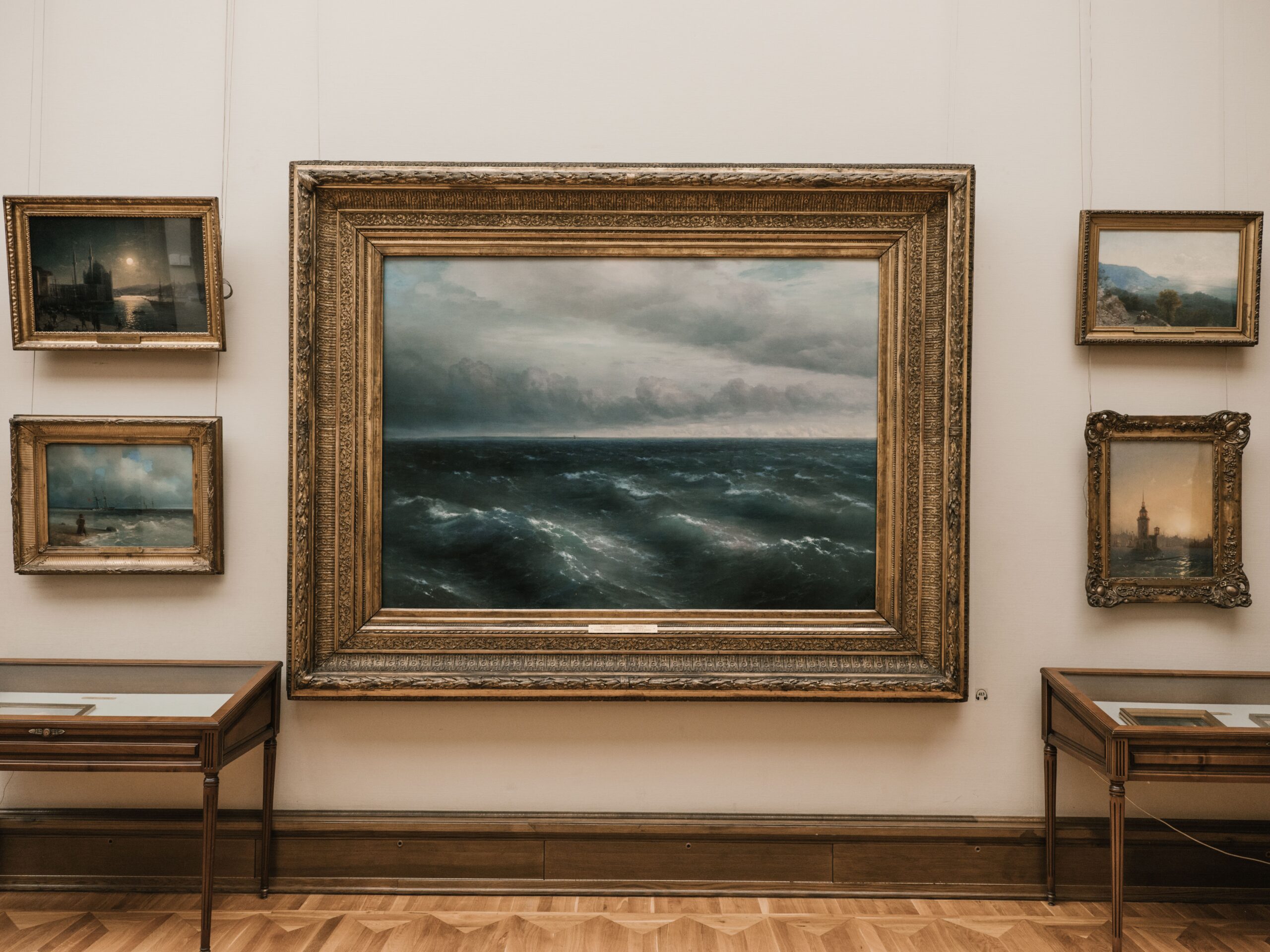
Traditionally, museums have relied on several security systems. CCTV, access control, intruder detection and trained security staff all play an important role in protecting valuable collections. However, a fundamental challenge remains: better cameras alone don’t solve the problem of human attention. A museum could replace 80 cameras with 80 higher-resolution models, but if one or two operators monitor those feeds, they can’t watch every piece of artwork continuously.
Artwork-level protection changes the approach. Instead of relying on a security operator to spot an incident across multiple screens, object-level technology can immediately identify which artwork needs attention and alert the security team.
This is particularly relevant as more museums reconsider their security infrastructure. In France, for example, the Ministry of Culture has introduced a new security action plan for museums and heritage institutions, backed by a €30 million security fund. Investment in traditional infrastructure remains important, but effective museum security also means considering how individual artworks are protected once visitors are inside the gallery.
Why CCTV Alone Can’t Monitor Every Artwork in Real Time
CCTV is an essential part of museum security systems. It provides real-time visibility across galleries, while recorded footage can also support investigation if an incident occurs. However, a large museum might operate dozens or even hundreds of cameras across different spaces. No matter how clear the footage is, security operators can’t watch every feed simultaneously or maintain constant attention on every piece of artwork.
There’s an important difference between having CCTV coverage of an incident and detecting that incident immediately. Artwork-level protection addresses this gap by monitoring the object itself. If the system detects unexpected movement, vibration, or tampering, it can generate an alert immediately. Rather than asking operators to continuously search for unusual activity, it tells them which object requires their attention.
What Happens to Museum Security During Public Opening Hours?
The security environment changes significantly when a museum opens its doors to visitors. Access control and intruder detection can protect restricted areas, but inside public galleries, visitors legitimately occupy the same spaces as valuable collections.
This creates a different security challenge. People are expected to move around exhibitions, approach displays and spend time close to valuable objects. So, traditional building-level security needs to be supported by protection that operates closer to the collection itself.
Fortecho remains active 24/7, including during visitor hours. This provides museums with continuous object-level monitoring while maintaining the open, accessible environment visitors expect. For institutions looking to protect art without adding unnecessary physical barriers, this can provide much more precise information about activity around individual objects.
Bringing Security Closer to the Artwork
Artwork-level protection changes where security monitoring takes place. Rather than focusing on the whole room, an individual painting, sculpture, display case, or other valuable object can be monitored directly. Fortecho uses discreet wireless RFID tags that can provide real-time alerts when predefined conditions are triggered. Sensors can be concealed behind or within objects, helping museums protect collections without affecting presentation.
Laser-based perimeter protection is another option. Invisible detection zones can be created around artwork or a group of artworks, alerting teams when visitors enter a protected area. This can be particularly useful when objects are displayed openly, and physical barriers would interfere with the visitor experience.
The right approach depends on the collection and gallery. Some objects might require individual tags, others benefit from laser protection, while particularly sensitive displays can use different technologies together as part of a wider strategy. The aim is to detect interaction with the object or protected area rather than relying solely on observation of the wider gallery.
From Artwork Interaction to an Immediate Alarm
The real value of artwork-level monitoring is reducing the time between an event happening and the security team becoming aware of it. Fortecho’s security technology provides real-time audible and visual alerts in the security control room and, potentially, within the gallery when alarm conditions are detected. These can provide museum staff with information about the affected object and its location, helping them respond immediately.
Local alerts can also form part of the overall security approach. For example, laser motion detection can be configured with different protection zones, raising an audible pre-alarm if a visitor crosses one boundary before escalating to a full security alarm if they move closer to the protected asset. Instead of relying on someone to notice unusual behaviour across a wall of CCTV screens, the interaction itself triggers the security response.
Connecting Artwork Alarms with CCTV
Artwork-level protection and surveillance systems shouldn’t be viewed as competing technologies, and they become considerably more useful when they work together. Fortecho integrates with existing security infrastructure, including CCTV systems, allowing museums to add object-level protection without replacing the platforms their security teams already use.
When an artwork alarm is triggered, the relevant camera view can be automatically brought to the operator’s attention. CCTV then provides immediate visual context, allowing the security team to assess what’s happening and respond appropriately. This changes CCTV’s role: cameras become more actionable when operators are automatically directed to the right screen.
Fortecho installations at major cultural institutions demonstrate this approach in practice. At Louvre Abu Dhabi, for example, Fortecho software is integrated with the museum’s wider security network, BMS and collection tracking software. When an alarm is triggered, the necessary information is automatically provided to security staff.
Building a Layered Approach to Museum Security
No single security measure addresses every museum security risk. CCTV provides visual coverage and recorded evidence, access control manages who can enter restricted spaces, intruder detection protects entry points, security staff provide human judgement and the ability to respond, and artwork-level monitoring adds another layer by focusing protection directly on the objects the museum is responsible for.
Each technology addresses a different risk, and protecting valuable collections requires security at both building and object level. Fortecho has worked with museums and cultural institutions worldwide to integrate object-level monitoring with existing security infrastructure. Rather than replacing established art gallery security systems, the aim is to strengthen them with another layer of discreet, real-time protection.
Protect Your Collection with Fortecho
Effective museum security works in layers. Building-level systems remain essential, but artwork-level protection can provide the immediate, object-specific information these systems can’t provide on their own.
Contact our team at Fortecho today to discuss how advanced IoT and Active RFID technologies can integrate with your existing museum security systems and provide an additional layer of protection for your collection.